
Finding the best international schools in Lisbon is rarely about reputation alone. Commute, class size, curriculum, and how long you plan to stay all shape the answer.
Moving to Lisbon with children means making school choices fast. The best international schools in Lisbon span IB, bilingual, and Cambridge models at very different price points.
The right choice depends on criteria that rarely appear on school websites. Astoria International School, as one of the best international schools in Lisbon, has addressed these doubts for Portuguese and expat families since 2009.
How to Choose an International School in Lisbon: Where to Begin
Lisbon has more than 30 accredited international schools, and the choice is wider than most families expect upon arrival. Reputation alone is rarely the right filter: age group, language goals, location, and how long you plan to stay all matter more.
Objective Criteria for Choosing the Right School
Knowing what to look for is hard. The five criteria below help you cut through the marketing and focus on what will actually shape your child’s daily experience and your family’s quality of life.
1. Location and Commute in Lisbon
Most international schools in Lisbon are not, in fact, in Lisbon proper. The main school corridor stretches some 40 kilometres west towards Cascais, with major campi in Carcavelos, Oeiras, and Sintra. Fewer schools operate within the city itself, in neighbourhoods such as Avenidas Novas, Alcântara, and Parque das Nações.
Most larger schools run bus services into the centre, but that adds cost, waiting, and one more transition to an already long day, which is why, for families living in Lisbon itself, school proximity tends to matter more than it looks on paper.
2. Student–Teacher Ratio and Class Size
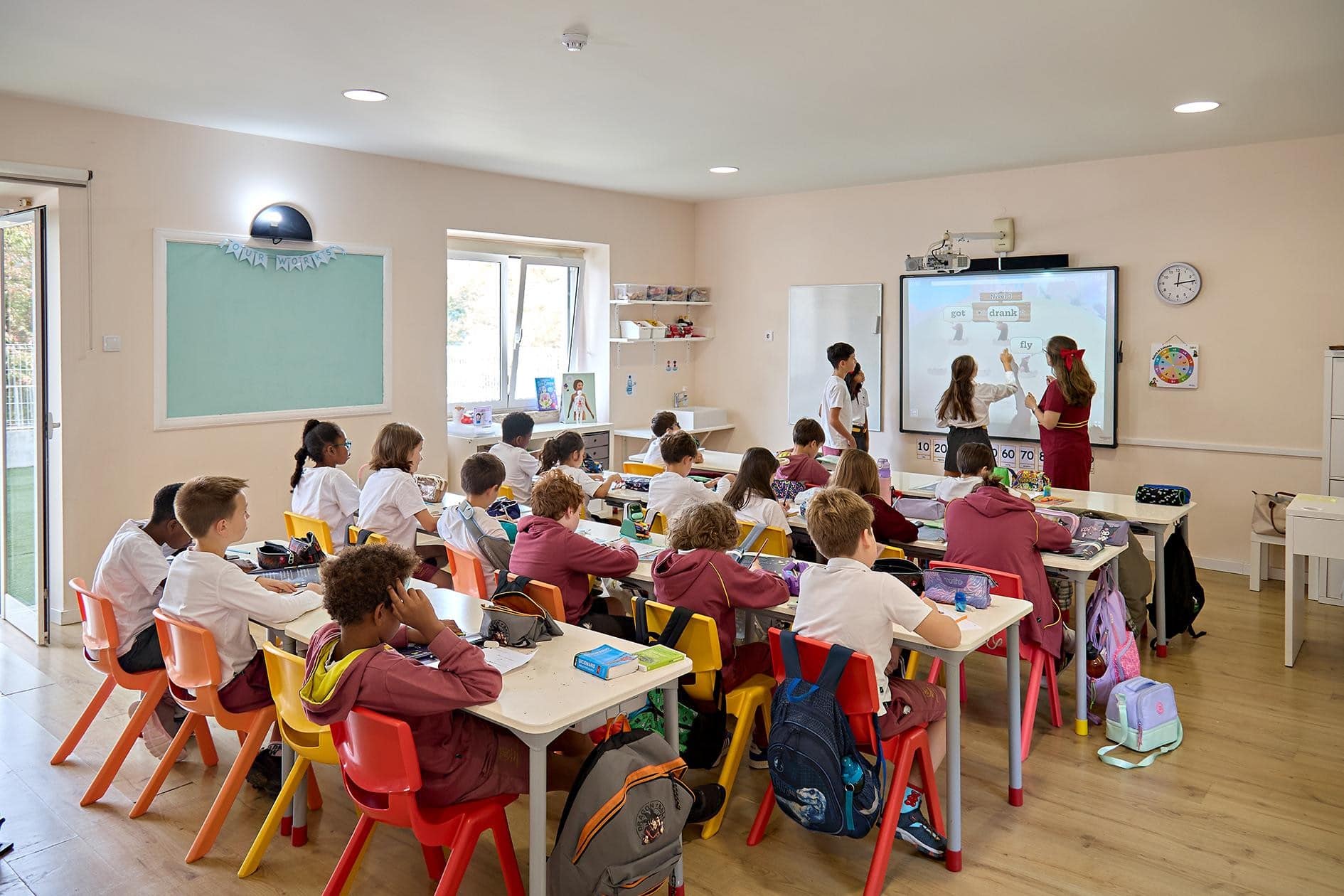
The average class size across Lisbon’s international schools sits at approximately 15-18 students. Smaller classes make differentiated teaching possible: teachers can adjust their approach to individual children and build the kind of trust that matters most when a child is navigating a new language or social environment.
When visiting schools, always ask about class sizes for your child’s specific year group: a schoolwide average can mask significant variation between levels.
3. Pedagogy and Child Development
How a school approaches learning matters as much as what it teaches. Schools grounded in research-backed frameworks design learning around each child’s individual strengths rather than a uniform delivery model.
Ask every school you visit what their pedagogical model is, then ask for a concrete classroom example. The specificity of the answer tells you more than the label does.
4. Extracurriculars, Languages, and Support Services
A school’s character becomes visible beyond the classroom. The practicalities—extracurricular activities, a guidance counsellor, extended care hours, a decent lunch—matter more than they sound, especially during the first months in a new country.
For international families, a complete multilingual environment also offers a long-term payoff: children who grow up moving between languages develop cognitive and social advantages that last well beyond school age.
5. Fees and What’s Included
Annual tuition at international schools in Lisbon ranges widely from €8,500 to €25,000 per year, with premium IB Diploma programs exceeding that threshold. Bilingual schools following a Portuguese-international model tend to sit at the more accessible end of the range.
The headline figure is rarely the full cost: enrolment deposits, school transport, meals, extracurricular fees, and Cambridge or IB examination fees can all add substantially to what families pay in practice. A full cost breakdown helps families budget realistically before they begin shortlisting.
Admissions Calendar and Enrolment Process in Portugal
Portugal’s school year runs from mid-September to late June, divided into three terms, with public holidays set annually by the Ministry of Education. Enrolment at private and international schools typically opens between January and March for the following academic year, and popular schools in younger year groups fill faster than most families expect.
If you are planning a move, start the process as soon as possible. Most schools require prior school records, a completed application form, and an in-person family visit; some also conduct a placement assessment for students joining mid-cycle.
In Portugal, private school enrolment is governed by current legislation allowing rolling admissions throughout the year, though September entry remains the smoothest transition point for children joining a new school community.
International Schools in Lisbon: an Overview of the Main Options
Lisbon’s international school paradigm is larger and more varied than most newcomers expect, spread across different curricula and geographic clusters.
British and Cambridge-Curriculum Schools
These schools follow the English National Curriculum through to GCSEs, with most offering the IB Diploma in the final two years. Instruction is in English, Portuguese is taught as a separate subject, and accreditation typically comes from bodies such as CIS (Council of International Schools) or COBIS (Council of British International Schools).
They are well-established and academically strong, but most campi sit along the Cascais corridor, west of the city centre, which means a daily commute for families living in Lisbon itself.
IB World Schools
Schools following the International Baccalaureate offer the full continuum: Primary Years Programme (PYP), Middle Years Programme (MYP), and Diploma Programme (DP).
The IB qualification is accepted by universities in over 90 countries, which makes this model particularly suited to highly mobile families who may relocate again before their children finish school.
It is a strong option for the right profile, but if your family is settling in Lisbon for the medium- to long-term, building a real connection to the city and its language matters too, and pure IB schools rarely prioritise that.
American-Curriculum Schools
These schools follow a US-style academic pathway leading to a High School Diploma, sometimes combined with the IB Diploma in upper grades. They are accredited by American and international bodies and tend to draw a mix of American families, global expats, and internationally minded Portuguese families. Most are located outside Lisbon proper, which again raises the question of commuting for centrally based families.
Bilingual and Hybrid Schools
This is the model that makes the most sense for families who are genuinely planting roots in Lisbon. These schools follow the Portuguese national curriculum while delivering a significant proportion of lessons in English, and the best ones add further languages as children progress.
Children leave genuinely bilingual or multilingual, academically aligned with Portuguese secondary education, and fully integrated into the city where they actually live. Fees tend to be on the more accessible end of the range, and several schools in this category are located in Lisbon itself.
This is where Astoria sits, and among Lisbon’s bilingual schools, it is one of the most clearly defined and most recommended options.
Where Astoria International School Fits In
Not every family needs the largest campus or the most internationally recognised brand. What many families actually need is genuine attention and a school where each child is known as an individual rather than a year-group number.
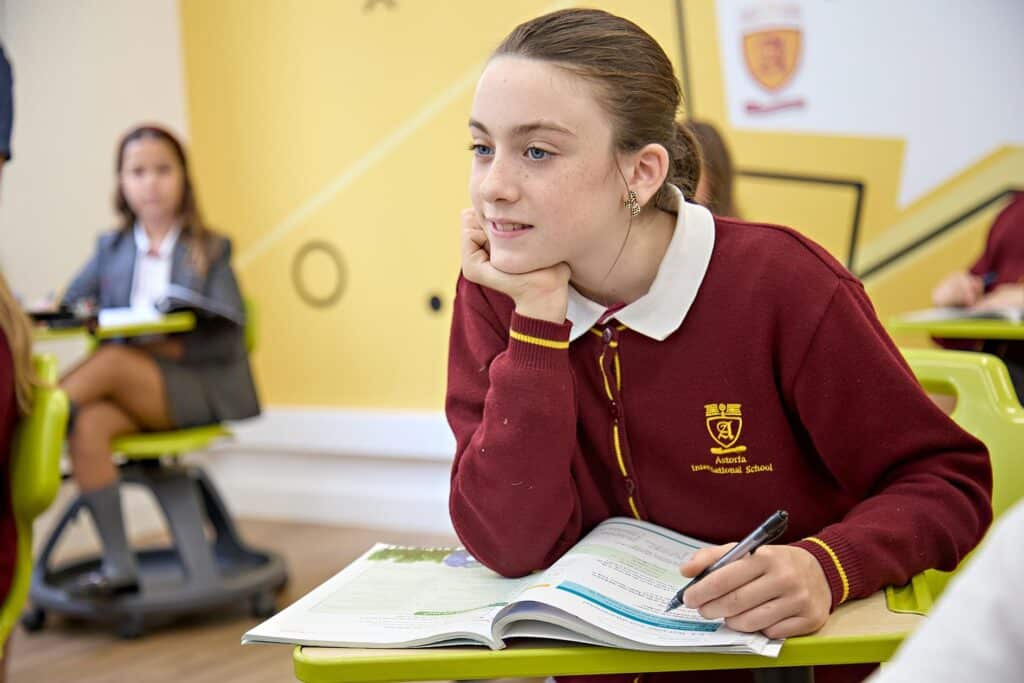
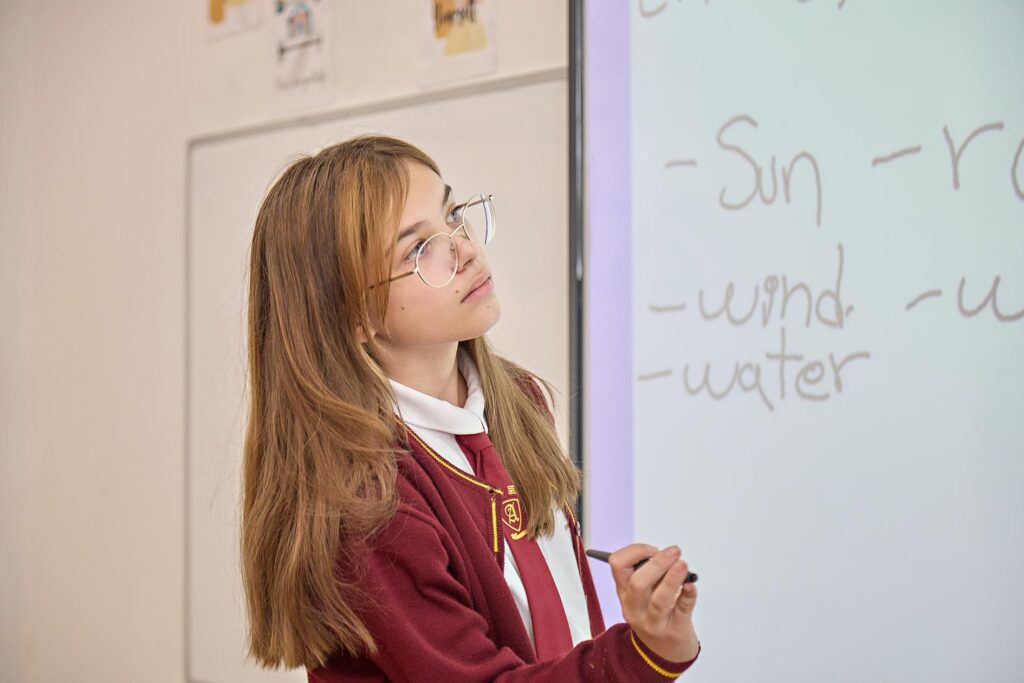
Astoria International School is a private school in Lisbon, located in the very heart of the city. Founded in 2009, it covers the full continuous pathway from Nursery and Daycare through to Upper Secondary (Year 9). Its students move between four languages over the course of their education, beginning with English and Portuguese and expanding to German in Year 3 and French from Lower Secondary.
Astoria is a Cambridge International School and an official Cambridge English examination centre, jointly awarded by Portugal’s Directorate-General for Education (DGE).
Teaching at Astoria draws on Howard Gardner’s Multiple Intelligences Theory and the Modern School Movement: two frameworks that put the child, not the curriculum, at the centre of the classroom.
Astoria is one of several options in a city with no shortage of strong choices. But it is a clearly defined one with a consistent pedagogical identity, a genuine multilingual ambition, and a central location that removes the daily commute equation entirely for families settled in Lisbon itself.
The most reliable way to assess fit is to experience it in person: requesting a visit is the simplest way to meet the team and see the school on an ordinary day.
Making the Decision
The right international school in Lisbon is the one whose pedagogical approach aligns with how your child actually learns and whose location fits your family’s daily rhythm.
The criteria in this guide provide a framework for navigating that range without feeling overwhelmed. Whatever you choose, visit in person and ask the questions that matter most to your family.
Perguntas frequentes (FAQ)
How early should families apply to an international school in Lisbon?
Established schools in the Lisbon area can have waiting lists of 12 to 24 months for competitive year groups. For schools within the city, timelines are generally more flexible, though starting at least six months before your intended entry date is a safe minimum. Rolling admissions at private schools in Lisbon allow for some flexibility, but early contact is always advisable.
Can a child who doesn't speak English enrol in an international school in Lisbon?
Within the EU and in countries with bilateral agreements with Portugal, the Portuguese curriculum is fully recognised. Outside of that, recognition varies and is not guaranteed.
For families with international university ambitions or the possibility of relocating again, it is worth knowing that not all schools in Lisbon follow the Portuguese curriculum exclusively: some offer Cambridge IGCSE or IB qualifications as their primary credential, while others follow the Portuguese framework and add internationally recognised certifications on top.
Is the Portuguese national curriculum recognised internationally?
A bilingual school in Lisbon delivers a meaningful proportion of the curriculum in two languages—typically English and Portuguese—aiming for genuine dual-language proficiency and cultural grounding in both. An English school in Lisbon primarily delivers instruction in English, following a recognised national or international curriculum such as the British or American system, with Portuguese offered as a distinct subject. The learning outcomes, daily rhythms, and long-term language profiles differ significantly.
What is the difference between a bilingual school and an English school in Lisbon?
A bilingual school in Lisbon delivers a meaningful proportion of the curriculum in two languages – typically English and Portuguese – aiming for genuine dual-language proficiency and cultural grounding in both. An English school in Lisbon primarily delivers instruction in English, following a recognised national or international curriculum such as the British or American system, with Portuguese offered as a distinct subject. The learning outcomes, daily rhythms, and long-term language profiles differ significantly.
Does Astoria accept mid-year admissions?
Yes. In line with Portuguese legislation, enrolment at Astoria is open year-round. The process starts with an inquiry, after which the Psychology and Guidance Department schedules a family visit to present the educational project and assess the student’s profile. A private visit is the natural first step.